I have stood on both sides of the table.
For part of my career I worked the line at a cabinet plant. Now I am the one who walks in with a deck, a set of questions, and a recommendation. I know both views, and I have come to believe the second one forgets what the first one knows.
What the redesign got right, and what it missed
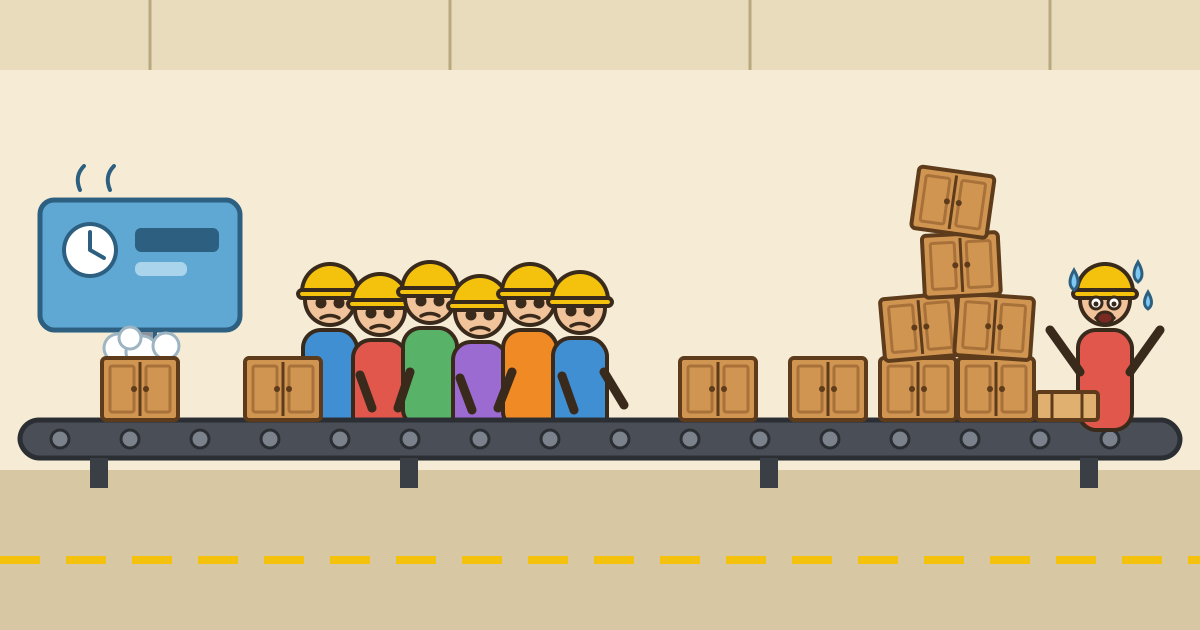
At the plant, the line was redesigned to increase productivity. The logic was clean. The responsibilities in each cell were divided in half, so each person had less to do and the work moved faster.
On paper, it worked. We produced more cabinets.
Then the floor started to change. Splitting the work meant adding people, and more people meant tighter space. Moving around the line got harder. The extra hands that were meant to speed things up were now in each other’s way.
The next problem showed up at the end of the line. We were building more cabinets than one person could crate. All the speed we had gained piled up at a single station, and that one person became the bottleneck for the whole operation. The line could only run as fast as the crating allowed.
Then there was the foam. The foaming machine insulated the cabinet, but the foam needed time to set and cure before anyone could work on it. That wait introduced variance into production. Some cabinets were ready when the next cell needed them. Others were not. The rhythm the redesign promised kept breaking in small, unpredictable ways.
None of this was visible in the plan. All of it was visible to the people standing on the floor.
What we are trained to see
Consultants are hired for expertise, and we earn it. We learn to run discovery, ask sharp questions, and gather requirements with discipline. We map the process, find the gap, and design the answer.
But gathering requirements is not the same as living inside them. A requirement is a sentence on a page. For the person doing the work, it is Tuesday morning, a full queue, a crowded aisle, and a supervisor asking why the numbers moved.
If our whole career has been spent collecting the story of the work, we can mistake the story for the work.
The job behind the task
This is where the Jobs to Be Done approach earns its place. The idea is simple. People do not adopt a solution because of its features. They bring it into their work to get a job done. If we want to understand why something succeeds or fails, we have to understand the job.
The redesign at the plant focused on the task: make each cell do less. But the job was larger than that. The job for the people on the line was to build a cabinet to standard, keep their pace, avoid rework, and finish the shift without fighting for space. The job for the operation was to get finished cabinets out the door.
A redesign can improve a task and still damage the job. We made one step faster and made the whole system harder to run.
That is the question I try to ask now, before any recommendation: what job is each person trying to get done, and does this change help them do it or get in the way?
Asked early, that question surfaces the things a process map hides. How much room people need to move. Where work will collect when one step speeds up. What waits, like curing time, will do to the rhythm. Those are not edge cases. They are the job.
Where the recommendation lands
A recommendation does not stay in the conference room. It travels. It becomes a new layout, a new approval step, a changed routine, a number someone will now be measured against.
The people who receive it were rarely in the room when it was shaped. They find out what we decided when it shows up in their day. Some will see the logic right away. Others will see one more thing added to a job that was already full.
I know the quiet that settles over a floor when a change is announced and nobody has been asked a question about it. That quiet is not agreement. It is people deciding how much to say.
What we owe
I think our responsibility to the client has three parts.
Understand the job, not just the process. Spend time where the work happens. Ask people what slows them down and what they would never want to lose. Watch the movement, the waiting, and the workarounds. A workaround is not a violation. It is the floor telling us where the design fell short.
Look past the step you are improving. Every gain moves pressure somewhere else. Before we celebrate a faster cell, we should know where the work will pile up next, and who will be standing there when it does.
Stay accountable after the handoff. The engagement ends on our calendar. For the client, it begins there. We owe them our attention through the stretch when the new way is harder than the old way and trust is thin.
The people side is the work
I do not see the people side as soft. It decides whether the technical work survives.
A well built solution that people resent will be worked around, then abandoned, then quietly replaced. A good solution that people helped shape will be defended, improved, and carried forward by the ones who live with it.
That is the difference between delivering something and leaving something behind.
What I try to remember
Before I make a recommendation, I picture the person who will receive it. Not the executive who signed the statement of work, but the one standing at the line, the counter, or the desk. I ask what job they are trying to get done, and whether I would be willing to work inside what I am about to propose.
If the answer is yes, I put it forward with confidence. If the answer is no, I have more work to do.
We are hired to know things. We are trusted when we remember who we know them for.